Art
Book Reviews
cont.,
Color Theory for Artists: Everything you need to know about working with colour is a great go-to standard book on colour theory. It covers the usual attributes of colour with hue, value, saturation, temperature and its transparency or opacity. I particularly enjoyed the chapter on pigments and paints.


So many Banksy's have disappeared over the years. But maybe that was always the intention although I'm sure he didn't think at first that a lot of times they disappear because people see the dollar signs rather than the art. I'm sure he was aware that many would be painted over or some council worker would want them removed as they are grafitti. Banksy's Lost Works records these mostly ephemeral works. It's a very interesting read.
I've actually been creating linocut stamps to add to my urban sketching so it was nice to see a book about it. Linocut Printmaking in the City by Ella Flavell includes projects that involve linocut as the full urban "sketch." Flavell describes what you need to get started and even what type of papers to select. There are even projects featuring collage papers to bring your work to life and using collagraph and textures.

Like the linocut book above, the author, Nick Morley, of Linocut: Learn in a Weekend lays out all that you need to start linocutting. He also provides you with images to trace and use yourself to get familiar with the process. It's very approachable and you really could learn in a weekend.

I'm trying to use the gel plates that I have. I like using them in my urban sketching as well like incorporating them for texture or framing etc. But I'm always on the lookout for new tips and tricks. The Gelli Arts Printmaker's Handbook is a great starter book for your gel printing journey. The author, Jessica Russo Scherr covers using image transfers (and how to be successful at this from the get go), stencils, magazine transfers as well as discussing general art decisions on composition and colour palettes.

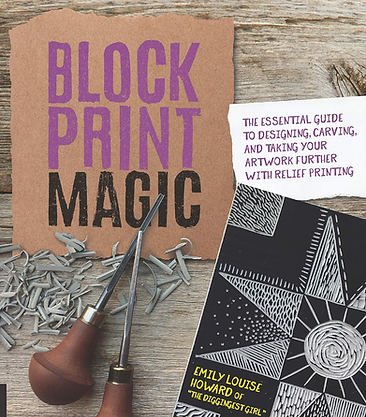
Once you graduate from the book above you may want to push yourself with Block Print Magic by Emily Louise Howard. She leads you through several projects that go a step further. I particularly like the project showing you various backgrounds you could print on like a page from a book or tissue layers or other textured paper. You can even involve stitching. I like that she has selected other artists to spotlight so you are really getting a range of ideas and styles.
Lives of the Great Makers covers most fine art and craftspeople from the 16th century to present drawn from the V&A collection. 40 makers are highlighted and illustrated. These include William Morris, Christopher Dresser, Eileen Gray, Lucie Rie and range from silverware, to glass, furinture, pottery etc. It's a lovely collection.

Still not done with Gelli plate printing? What about adding to your research Fun with Gelli Plate Prints. The authors in this book also show you how to create your own gel plate (unlike the other two books that are produced with the branded Gelli Plate). There's the usual list of materials and techniques but also help with understanding colour theory and how to use this most effectively.
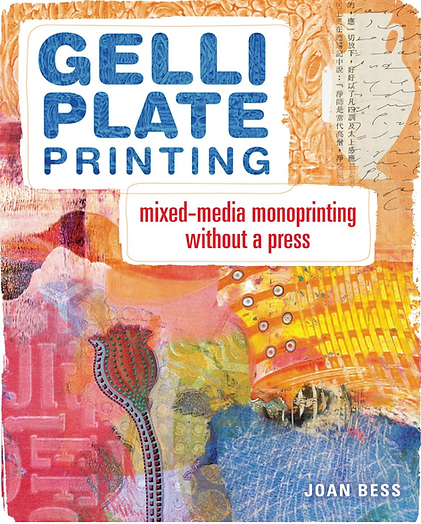
Joan Bess is the inventor of the actual Gelli plate so she knows a thing or two about getting the most out of this printing method. In fact there are 60 techniques listed in Gelli Plate Printing that you can try out with more examples of variations. At the end of the book she showcases other gelli plate artists who contributed to the book with examples of their work.

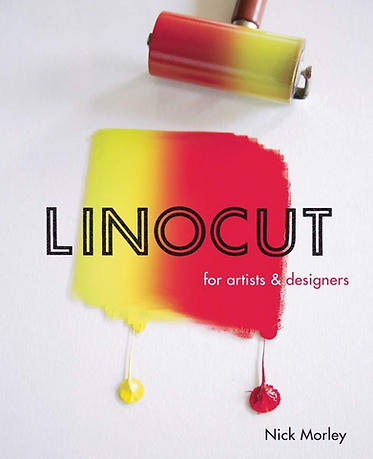
Still in a linocut mood? This book really goes beyond the other books above that are more about getting you started. Linocut for Artists and Designers as the name suggests is more on the professional side. The author showcases 8 international artists and describes how linocuts can be applied including to fabric. Morley goes over the various types of presses that can be used if you have access to one or thinking about investing in one.
If you've been following along you know that I love looking at other artists' sketchbooks. The Artist's Sketchbook: Inside the Creative Mind goes through sketchbooks in the V&A collection. These range from the famous historical like Da Vinci to amateurs and artists of the modern day. I am nerdy and love the details about the type of sketchbook ("140 pages of white buff paper with gilt edges, with 137 drawings on laid paper pasted in, bound in blue cloth"). Some entries have photos of the outside of the book as well as examples from inside. I particularly loved the sketchbook by a Mrs. Hughes and her teacher Mr. Ryland. The teacher provided drawings that she had to copy on the opposite page.


Hockney's Pictures is another exhibition catalogue of the artist's 50 years of production. The large volume consists mostly of images (over 300) and quotes from the artist divided into problems of Depiction, Life Stilled, Portraits, Space and Light, Endless Inspiration (Yorkshire, Computers, Yosemite etc.). Here is a delightful overview of his work in all media.

I missed both Tracey Emin's retrospective at the Tate Modern while I was in London (I was there but the crowds put me off) and also seeing her studio in Margate (not open on that day). So this, Tracey Emin Paintings, is the next best thing. While her career started with painting and drawing she turned her attention to film, photography, sewn appliqué, sculpture, and neon, but in recent years she gone back to painting. She is nspired by artists Egon Schiele and Edvard Munch. Her paintings, like much of her art, are provocative, confrontational, and vulnerable, personal and universal.

Yes another David Hockney book. Recently the great artist passed away and so I felt I needed to go back over his work. This book was also refered to in my online course through the St. Ives School of Painting. David Hockney: A Bigger Picture is the exhibition catalogue of the same name and a film documenting this work that concentrates on his home county of Yorkshire. The thing that struck me the most was his writing on that we see with memory - a memory of place beyond topography and also of artistic tradition. The reproductions of the works are beautiful in this substantial book.

Love Lucian is a collection of Lucian Freud’s early letters from 1939-54, partly from his estate, private collections and public archives (the Freud Museum, the National Portrait Gallery, and the Tate). The early thoughts of schoolboy Lucian in letters to his parents to correspondence with others who will become important to his career often feature drawings and quirky details. I love seeing how his handwriting would change depending on who he was writing to.

My Heart Is This: Tracey Emin on Painting is a conversation with the artist (led by art critic and historian Martin Gayford) particularly in regards to her painting. It is really a look at her practice and career and how things have changed since her cancer diagnoses.
I'm really drawn to Emin's mark making rather than her subject matter.
More snooping in artists' sketchbooks... JMW Turner: The Skies Sketchbook is a complete reproduction of the great Turner's sketchbook (including the flypaper). This sketchbook is thought to date from 1818 or later. The artist has worked from back to front. The watermark on the paper dates its production to 1814. Most of the images are from on location in London. Some of the warmer skies may be from his trip to Italy in 1819. And of course there are the skies of Kent, dear to the artist, that he considered the best skies in Europe.


The Secrets of Painting is by a painter, Lachlan Goudie, who himself is the son of a well-known artist. This book looks across the centuries since the first known artistic images (cave paintings, Fayum funerary portraits) to the present day (Hockney digital drawings and Refk Anadol whose studio consists of computer scientists, architects and neuroscientists). Now normally these books are by art historians (and I have an MA in art history so this is no diss). What makes this interesting is that it is by an artist and seen from the perspective of a working artist. In some of the chapters he focuses on particular artists, and not just the big, big names. I particularly enjoyed the chapter on Alma Thomas who developed her technique that made her famous when she was in her 70s. In 1972 she was 80 when she became the first African American woman to have a solo exhibition at the Whitney. This book is going on my Christmas wishlist!

This is the illustrator, Quentin Blake's third volume reflecting on his work on several projects. These range from vignettes created for a family room at Great Ormond Street Hospital to gigantic drawings for the Jerwood Gallery in Hastings as well as illustrations for books for which he is well-known. Really Pens, Ink & Places reads like a conversation with a friend who, even after years in the business, is still humble about his career and excited about his work.
This rather new book , Turner and Constable: Art, Life, Landscape by Nicola Moorby, is a very interesting read of the two artists born just 14 months apart and both of whom changed our approach to landscape painting and appreciation. It is really worth a cover to cover read rather than a pick through. The section on how both used printmaking and their time at the Royal Academy as students and teachers is is an interesting look at the similarities and differences.

50 Ways to Break the Rules in Oils by Haidee-Jo Summers may have oils in the title although there are a lot of “rules” that apply to acrylic, watercolour etc. The artist looks at composition and subject matters as well as colour and technique. I especially like the section on Rules of Behaviour like you can only paint outside on sunny says, don’t paint in midday sun - Haidee shows you with cheerful, bright paintings how breaking “the rules” can set you free. The format of the book and the rich images truly make for a great read.


Yes more on Hockney... The version of A Big Message: Conversations with David Hockney by Martin Gayford that I have from the library is the 2011 publication. There is an updated version with five new chapters and highlighting his work beyond 2011. This would be worth searching for. These are conversations between Hockney's favourite writer/biographer after a very tumultuous time personally and health-wise.
As with the "Skies" Sketchbook (above) this is an exact facsimile of a JMW Turner sketchbook. This particular one is in the Yale Center for British Art and is considered to be his Last Sketchbook (hence the title). The images are mainly of places in Kent and in particular Margate. A modern day Margate resident and artist. Tracey Emin, has a poem tucked into the pocket at the back of the book.


I'm not sure what lead me to the artist Cecily Brown (b. 1969). I know I watched a video interview of her and I just became entranced by her mark-making so I wanted to see more. This book, Cecily Brown: Death and the Maid, is for her exhibition at the Metropolitan Museum of Art in NYC where the British artist is based. 21 paintings and 26 works on paper over 3 decades are shown here. Her influences range from Willem de Kooning, Philip Guston, and Joan Mitchell to the Old Masters like Goya, Hogarth, Manet, and Rubens. Her work is sumptuous and thick with media and meaning. Towards the end of the book is an interview with the artist.
And of course one book on an artist is never enough. Cecily Brown: The Themes and Variations is another look back at this artist's work for two 2025 exhibitions (Dallas and the Barnes). The three essays in this volume look at her practice, the main themes in her work and seeing her work through a feminist perspective.

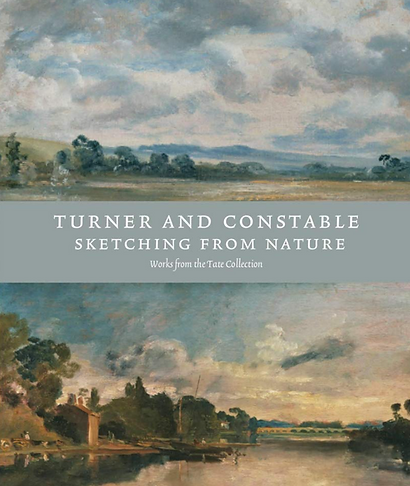
Yet another Turner and Constable comparison book but this one, Turner and Constable: Sketching from Nature, also looks at their contemporaries who were making the first forays into working straight from nature. Plein Air painting is something taken for granted now but during Turner and Constable's time the ease of taking media out into nature was only just beginning to be less cumbersome and prohibitive. Watercolour was quite new. There is also the change in attitude to landscape painting in general. I like seeing their contemporaries' work side by side theirs.
So you had a taste of a couple of facsimiles of Turner's sketchbooks if you checked the ones above. Turner's Sketchbooks by Ian Warrell is a survey of all of his known sketchbooks. Turner went everywhere with a sketchbook and these ranged from small ones that he could roll up and place in his pocket to more presentation worthy works in folios/albums.


I got to see the V&A Storehouse Museum in Winter 2026 but I was too early for V&A East. The Making of V&A East is the story of both of these institutions. I remember years and years ago I was at the off-site storage for the V&A when I was doing research. The colleague I met there to show me around said it was the dream to one day of the museum to have an open storage. I really never thought that would happen as often the arts and museums face more and more cuts rather than expansion. So it was such a pleasure to see the storehouse in person and I look forward to visiting the East location. This book is great to be able to sit with a cup of tea and learn more about some of the works I saw on the visit.